"China creeps towards hegemony in Asia, threatens India's borders, and treats other countries as junior partners, Indian-American Congressman Ro Khanna said.
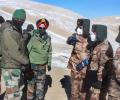
Both the Indian and Chinese armies have brought in more troops in sensitive locations like Demchok, Daulat Beg Oldie and areas around Galwan river as well as Pangong Tso lake in Ladakh, the sources said. The area around Galwan has been a point of friction between the two sides for over six decades.
Chinese Foreign Ministry spokesman Wang Wenbin said this at his media briefing as he parried questions on India's assertion that consensus reached by the leaders on maintaining peace along the border cannot be swept under the carpet.
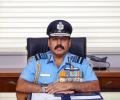
Air Chief Marshal Bhadauria was at the Leh IAF base on Wednesday where he reviewed operational preparedness of the force in effectively guarding the sensitive border areas in eastern Ladakh where Indian and Chinese armies have been on a nearly six-week standoff.
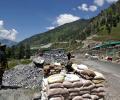
It will be the third road link to Ladakh after the other two roads: the Manali-Leh road and Srinagar-Leh highway. The work on reopening an alternative road to Ladakh from Himachal Pradesh has been expedited as it is a strategically key road, said an official on condition of anonymity, adding the project is expected to be completed by the end of 2022.
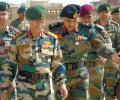
The main focus will be on the situation in eastern Ladakh where Indian and Chinese troops are locked in an eyeball-to-eyeball face-off in sensitive areas like Pangong Tso, Galwan Valley, Demchok and Daulat Beg Oldie

'Our villagers used to go up to Finger 4 and Finger 6, but today the Chinese are there.' 'Since April 2020, Chinese troops have blocked Indian troops from reaching at least ten patrolling points running from the Depsang plains in the north to Pangong Tso lake in the south.'

Xi arrived at the Nyingchi Mainling Airport on Wednesday and was warmly welcomed by local people and officials of various ethnic groups, Xinhua news agency reported.
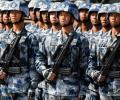
With the Indian Army having blocked the PLA several kilometres inside India, hundreds of soldiers from both sides remain in a tense face-off.

Addressing a meeting of the Congress Working Committee, he said there has been a 'complete and total failure' of foreign policy under the Modi government.
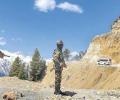
China and India have agreed to work to maintain peace along the Line of Actual Control and resolve the border standoff through talks while implementing the consensus reached between the two countries' leadership that 'differences' do not escalate into 'disputes', a top Chinese official said.

Army chief General Naravane said the ongoing dialogue will sort out all the perceived differences between the two countries.
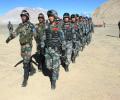
The talks between the two armies are going to be held this week at multiple locations including Patroling point 14 (Galwan area), Patrolling point 15, and Hot Springs area, top government sources said.
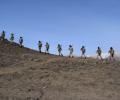
Asked about the reports of the troops on both sides disengaging and moving back to their previous positions, Chinese foreign ministry spokesperson Hua Chunying told a media briefing in Beijing that both sides are taking steps to ease the situation along the borders.

He launched the "cleanliness is service" exercise to push for greater public participation in one of his government's centrepiece programmes launched on October 2, 2015.
Sources said the Indian troops resolutely confronted the Chinese PLA soldiers.

The last conversation between the two leaders was on April 4 on the issue of hydroxychloroquine.

'The last ten months show that India is not going to trust China.' 'Our military commanders are not going to believe that all is well till it actually is.'

Jaishankar noted that it would be difficult to say what will happen in the future as there are a lot of "contradictions and frictions" out there today.

United States Defence Secretary Lloyd J Austin arrived in India on Friday on a three-day visit, aimed at further boosting bilateral defence and security ties in the wake of China's growing military assertiveness in the region including the Indo-Pacific.


The Chinese have only created limited defences for protection of their posts which are located well in depth and much away from the Line of Actual Control, notes Colonel S Dinny (retd).
Asked about the continued tensions along the border and whether the PLA troops action was anyway related to the disagreements with the Indian government's plan to lure business out of China, Chinese Foreign Ministry spokesman Zhao Lijian said both the countries were in diplomatic contact over the face-off between their troops.

At least a couple of Chinese military helicopters were spotted flying close to the un-demarcated Sino-India border in the area after the fierce face-off on May 5 following which a fleet of Sukhoi-30 jets of the Indian Air Force too carried out sorties there, the sources said.

The stand by China spelt out by its foreign ministry insisting that it takes the 1959 line on perception of the LAC amid a nearly five-month-long border standoff in eastern Ladakh triggered a strong reaction from India.

'The government will ensure that India's pride is not affected as far as the situation along Indo-China border is concerned'

China is spending billions of dollars to improve infrastructure in Tibet and other parts of its border with India. Claude Arpi explains why New Delhi can't afford to ignore Beijing's plans.

In the review meeting, Singh told the top military brass to continue to deal with the situation in eastern Ladakh and other areas with "firmness".
Singh said a meeting between senior Indian and Chinese military leaders has been scheduled for June 6 even as he asserted that India is not going to back off from its position. Asked about the current situation in sensitive areas in eastern Ladakh, he said Chinese have come up to what they claim is their territory while Indians believed it is theirs.
Indian and Chinese troops remained engaged in an eyeball-to-eyeball situation in several disputed areas.
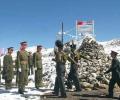
The Indian delegation led by Lt General Harinder Singh, the general officer commanding of Leh-based 14 Corps, and Commander of the Tibet Military District Maj Gen Liu Lin held an extensive meeting in Maldo on the Chinese side of the Line of Actual Control in eastern Ladakh on Saturday that began at around 11.30 am and went on till evening.

Defence Minister Rajnath Singh on Saturday asserted that the government will not allow India's pride to be hurt under any circumstances even as he said bilateral talks were on at military and diplomatic levels to resolve the row.
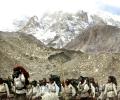
The Indian Army will continue to maintain its aggressive posturing in all disputed areas in eastern Ladakh and will not back off till status quo is maintained, sources said.
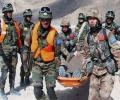
This is the first such incident along the border with China that Indian armed forces personnel have been killed after a gap of nearly 45 years.
'The Indian Army is fully prepared for a long and permanent deployment if the PLA does not retreat.'
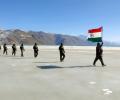
India has told China not to "shift goalposts" and "confuse" managing the border affairs and restoring peace at the frontiers with the larger issue of the resolution of the boundary question, which is dealt with by different designated mechanisms.

'We have to up our vigil everywhere, all along the LAC -- winter, summer or spring.'
The force also stated that such incidents happen due to differing perceptions of the LAC and there are established mechanisms to resolve such differences.
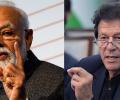
Modi's hardline policy towards Pakistan and J&K has created numerous leverages and bargaining positions that New Delhi can bring to the bargaining table and translate into concessions, argues Ajai Shukla.

A separate Union Territory has been a long-standing demand of locals, many of who have alleged that the Ladakh region had been neglected by leaders of Jammu and Kashmir.
